📰 It's “Hasta Luego,” Not “Adiós” Panamá!
Subscribe to The Driver Dispatch for the full Story.

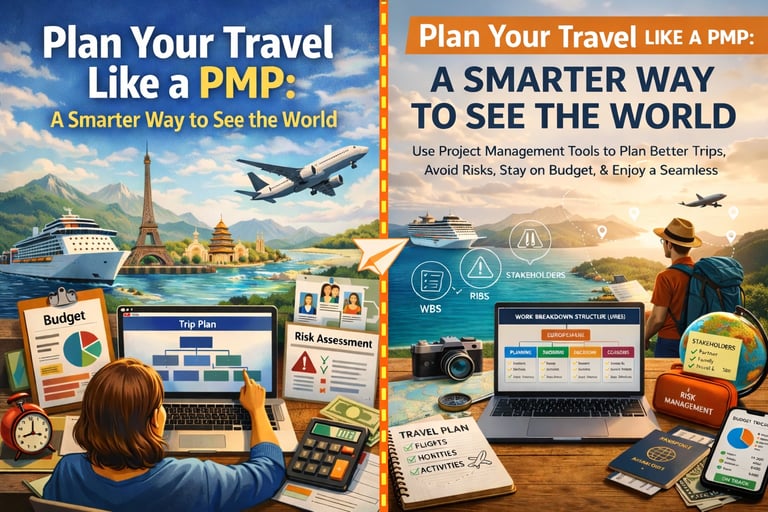
Plan Your Travel Like a PMP: A Smarter Way to See the World
What if you planned your travel the same way professional project managers plan multimillion-dollar initiatives? In this post, we explore how tools like Work Breakdown Structures (WBS), risk management, stakeholder alignment, and budget tracking can dramatically improve your travel experience. Whether you're planning a cruise, a multi-country itinerary, or long-term slow travel, these strategies will help you travel smarter, not harder.
TRAVEL TIPS & PLANNING
Tamara Driver
3/30/20262 min read
Plan Your Travel Like a Project Manager
When most people plan travel, they start with a destination. This makes sense and works for occasional travel.
When we plan travel, we start with structure. We are looking at a year or two or three in the future. This is still a work in progress, but using a structure has helped to identify missing key components and gaps in our travel. We also built in some flexibility to keep it fun.
Over the years, we realized that the same formal project management principles used in the corporate world can dramatically improve the way we travel. Instead of scrambling with confirmations, scattered emails, and last-minute stress, we use basic tools such as Work Breakdown Structures (WBS), risk registers, and cost baselines.
The result? Less stress. Better decisions. Smarter spending. More meaningful experiences.
Here’s how you can do the same.
1️⃣ Start With Your “Why” (Project)
Before booking flights or hotels, pause and ask:
Why are we taking this trip?
What do we want to feel when we return?
Is this relaxation, exploration, celebration, or research?
What’s our realistic budget?
For example, when we plan a trip, we consider:
Walkability to dining
Cultural depth
Food access that fits our lifestyle
Loyalty perks
Visa requirements
Health considerations
Clarity prevents overwhelm.
2️⃣ Break the Trip Into Simple Categories (WBS)
Instead of “planning a vacation,” break it down:
Flights
Lodging
Ground transportation
Activities & excursions
Dining
Insurance
Documentation
Budget tracking
When you organize travel into categories, it becomes manageable and far less stressful.
We personally use a structured spreadsheet for oversight and TripIt to keep our itinerary accessible and shareable. It keeps everything in one place and reduces mental clutter.
3️⃣ Book the Big Pieces First (Critical Path)
Some elements control everything else:
A travel deal
International flights
Cruise embarkation ports
High-demand hotels
Visa timelines
Secure those first.
Dinner reservations can wait. The flight that sets your entire schedule cannot.
4️⃣ Plan for What Might Go Wrong (Risk Management)
No one likes to think about disruptions — but smart travelers do.
Examples:
Arrive one day or more earlier for cruises
Pack essentials in your carry-on (like medication)
Double-check passport pages
Monitor final payment dates
Prepared travelers travel with more peace.
5️⃣ Know Your Numbers (Costs)
Travel should feel joyful, not financially stressful.
Track:
Deposits
Final payment deadlines
Points vs. cash decisions
Exchange rates (for international trips)
Travel deals
When you plan financially, you return home feeling fulfilled — not surprised.
6️⃣ Reflect After You Return (Lessons Learned)
After each trip, ask:
Did the hotel location work?
Was the stay too short or too long?
Would we return?
What would we adjust next time?
Each experience becomes data for the next one.
That’s how travel evolves from random vacations into intentional living.
Why This Approach Works (Outcomes)
As a travel advisor, I see the difference between rushed planning and structured planning every day.
Structure doesn’t remove spontaneity.
It protects it.
When the foundation is solid, you’re free to wander, explore, and fully enjoy the moment — because the details are handled.
Final Thoughts
You don’t need to be a project manager to plan well.
You simply need:
Clear intention
Organized structure
Realistic budgeting
Thoughtful preparation
When you approach travel this way, it becomes less chaotic and more aligned with your lifestyle, health, and goals.
And that’s when travel shifts from “a trip” to something much more meaningful.
💬 Let’s Plan It Well
If you’d like help designing a trip with this kind of thoughtful structure, I’d love to support you.
Whether it’s a cruise, a European itinerary, or a multi-destination journey — planning it right makes all the difference.